Woven Gold: Why the Banarasi Saree is the Ultimate Sustainable Luxury
Explaining why hand-loomed silk sarees represent the roots of slow fashion, and how modern designers are preserving this heritage.
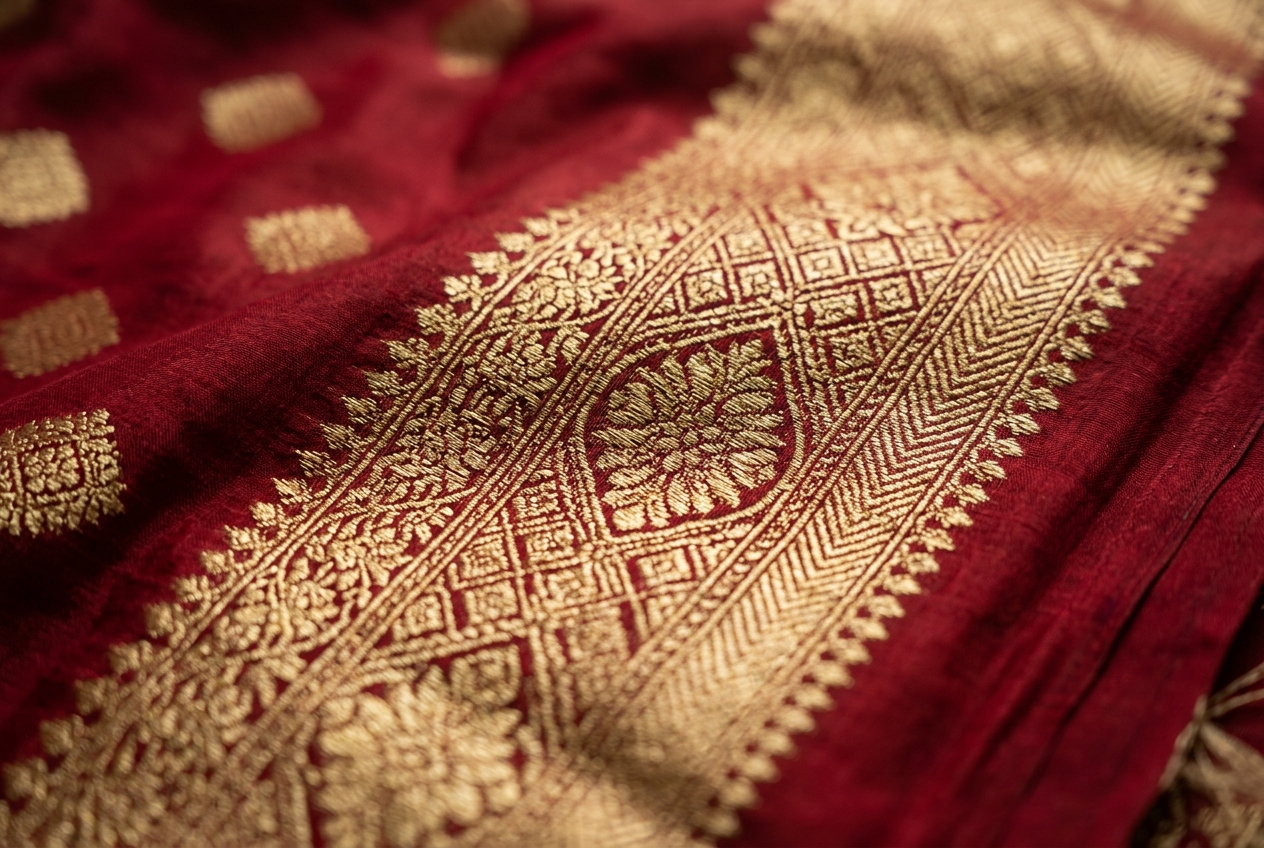
The Banarasi saree is a masterpiece of Indian textile design. Woven in Varanasi, these sarees are famous for their heavy gold and silver brocade work, fine silk, and elaborate patterns. While modern fashion trends shift rapidly, the Banarasi saree remains a timeless garment, representing the true essence of slow, sustainable luxury.
The Craftsmanship of Varanasi Weavers
Woven on traditional wooden handlooms, a single Banarasi saree can take anywhere from fifteen days to six months to complete. The process requires incredible coordination:
- The Naksha Grid: Weavers design patterns on paper grids, which are then translated into punch cards that guide the loom.
- Zari Brocade: Fine threads of silver or gold are woven into the silk warp and weft, creating metallic floral and foliage motifs.
- Katan Silk: Pure silk threads are twisted together to create a durable, lustrous base fabric.
Because each piece is handmade, no two sarees are identical. The minor variations in weaving are not flaws; they are the signature of the human hand.
Slow Fashion as a Heritage Investment
In an era of mass-produced synthetic garments, the Banarasi saree is an investment in slow fashion. These garments are passed down through generations, retaining their beauty and value. Modern designers are finding creative ways to incorporate Banarasi textiles into contemporary fashion, cutting them into structured jackets, modern drapes, and lifestyle accessories.
By keeping the handloom tradition alive, fashion founders are supporting weaver communities and proving that heritage and luxury are deeply connected.